
No nursing license required
What does a denials and appeals specialist do?
A denials and appeals specialist reads why a claim or authorization was refused, finds the evidence in the record that answers that specific reason, and writes the appeal before the filing deadline. The work is classification first: routing a denial to the wrong appeal level wastes the one attempt you get.
Also advertised as: appeals specialist, denial management specialist, AR denials analyst.What the job looks like day to day
- Read the denial and classify the actual reason behind the code
- Decide which appeal level and which deadline applies
- Mine the clinical record for the evidence that answers that reason
- Draft the appeal so it addresses the denial rather than restating the request
- Track submissions and outcomes so the same denial pattern gets fixed upstream
Who hires for this
Hospital revenue cycle teams, billing companies, specialty practices with high denial volume, and the agencies that staff appeals support.
What you need before you apply
No license required for most appeals support work, though clinical appeals often prefer a nurse. You need to read a denial code accurately and write clearly under a deadline.
Pay and outlook, stated honestly
- US RN license
- Not required
- Researched pay band
- $7-12/hr experienced
- Automation outlook
- Growing. Denial volume is rising and appeal rates stay low, which is the whole opportunity.
- Training maturity
- Practice: Deterministic workflow simulation with scored cases and safety paths.
Pay bands are researched ranges observed in public postings, not an offer and not a prediction of what you will earn. Employers set pay. RemoteNurse is training and practice, not a hiring guarantee.
How you practice this on RemoteNurse
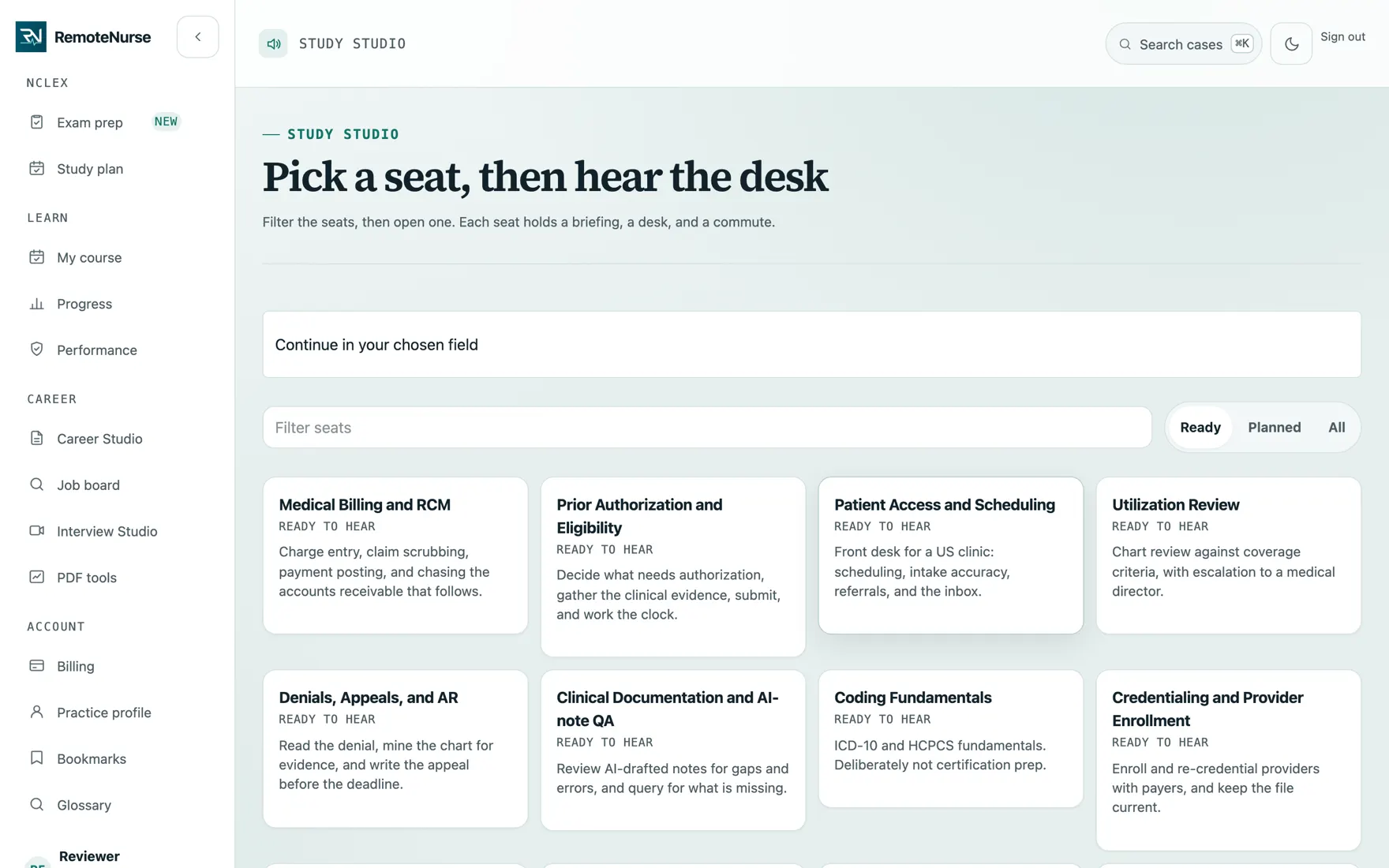
This desk draws on 14 practice tracks. You work synthetic cases in each, and a fixed rulebook scores the attempt.
Related drills: HIPAA, CRCR, CPB, CMCN. These are original practice items, not official examinations.
Common questions
Why is denials work growing?
Denial volume has been rising while the share of denials that are ever appealed stays low. That gap is the opportunity: unappealed denials are money already earned and not collected.
Do I need to be a nurse to write appeals?
Not for administrative and technical denials, which are the bulk of the volume. Clinical medical-necessity appeals more often go to a nurse or physician reviewer.
Where to go next
See live remote openings to check what employers are asking for, browse the agency directory for who staffs this work, or compare all 16 roles if this one is not the right fit.